Loading

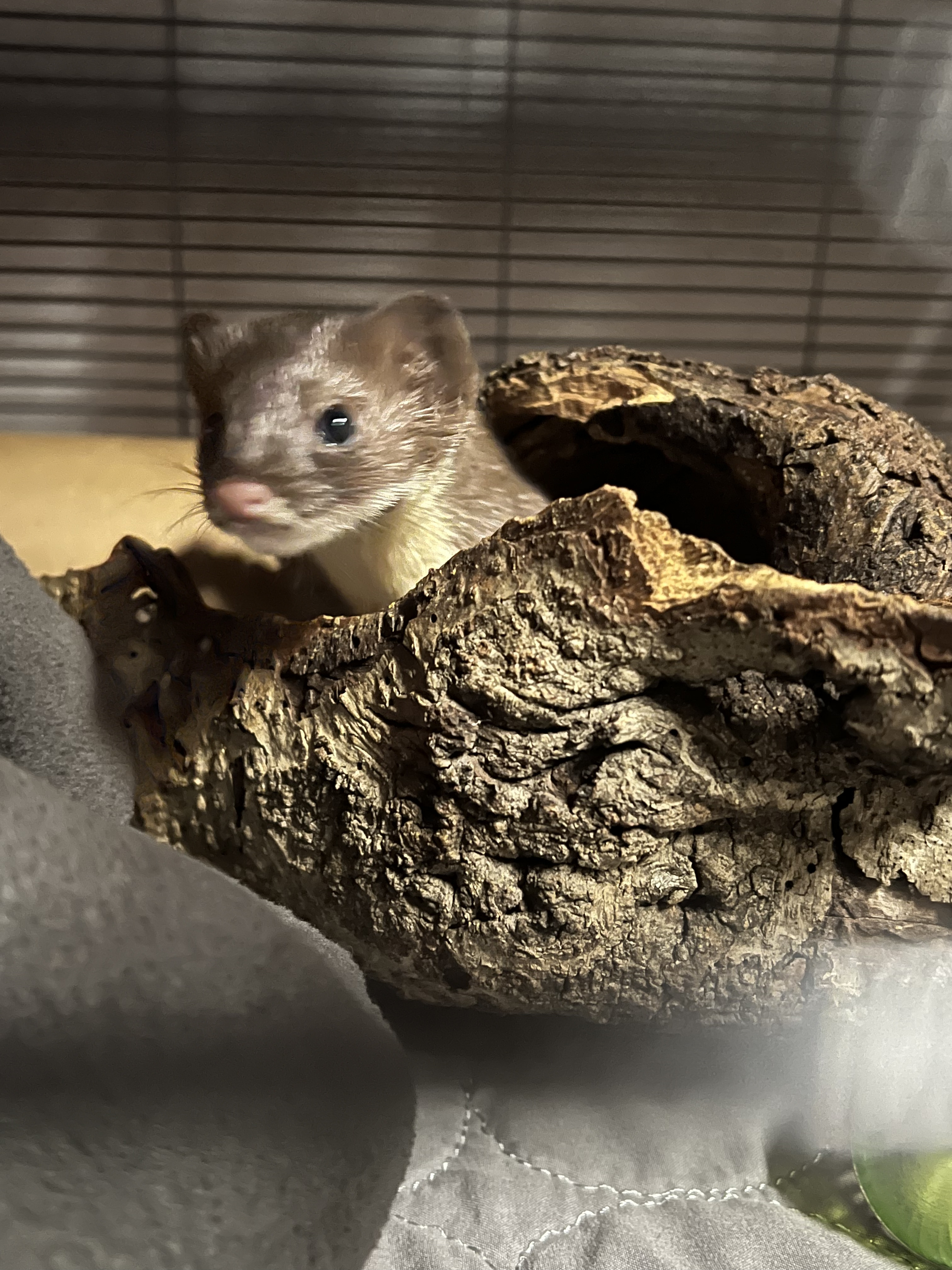
Neogale frenata
The long-tailed weasel is Louisiana's smallest carnivore — a fierce and agile hunter that punches far above its weight. Despite their tiny size, they are formidable predators that play an important role in controlling rodent populations.
Found in a variety of habitats across Louisiana including forests, open fields, farmland, and marshes — anywhere that supports adequate prey populations. They typically den in burrows abandoned by other animals, under tree roots, or in rock crevices, often lining the nest with fur from their prey.
Obligate carnivores with a diet dominated by small mammals, especially mice, voles, rats, and rabbits. They also eat birds, eggs, frogs, and insects. Weasels hunt by scent and can follow prey into burrows. They often kill more than they can eat immediately and cache excess prey.
Solitary and highly active, weasels have a very high metabolism and must eat frequently. They are active day and night and do not hibernate. Despite their small size they are bold, fearless hunters that will attack prey many times their own size. They communicate through scent marking and high-pitched squeaks and trills.
Long-tailed weasels can kill prey up to ten times their own body weight
Their slender bodies allow them to chase mice and voles directly into burrows
In northern states their coat turns white in winter — in Louisiana it stays brown year-round
They have a distinctive bounding gallop and often stand upright on their hind legs to survey surroundings
A group of weasels is called a "colony," "gang," or "pack"
Weasels can enter a torpor-like state to conserve energy during food scarcity