Loading

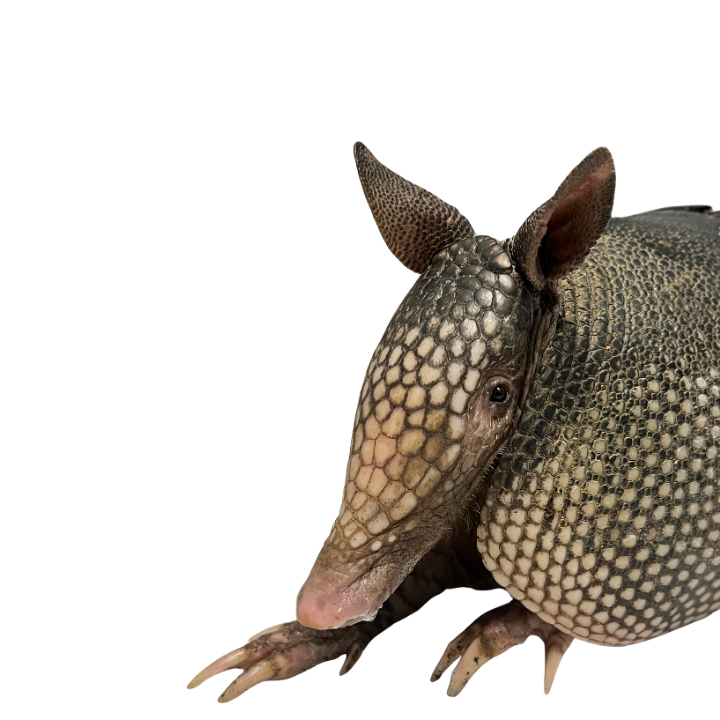
Dasypus novemcinctus
Louisiana's armored oddity, the nine-banded armadillo is one of the most distinctive mammals in the state. Though they look prehistoric, they are gentle insectivores that pose no threat to humans.
Common throughout Louisiana in forests, brushy areas, grasslands, and suburban neighborhoods. They prefer loose, moist soil for digging burrows and foraging for insects. Armadillos can have up to 12 active burrows in their home range, often sharing them with other wildlife.
Primarily insectivorous, eating beetles, grubs, ants, termites, worms, and other invertebrates found by digging in soil and leaf litter. They use their excellent sense of smell to locate prey up to 6 inches underground. They occasionally eat small vertebrates, berries, and fungi.
Mostly solitary and crepuscular to nocturnal, armadillos have poor eyesight but an exceptional sense of smell. When threatened, they curl slightly and rely on their armor for protection, or flee in a surprising burst of speed. They are strong swimmers and can walk along river bottoms.
Armadillos always give birth to identical quadruplets from a single fertilized egg
Their name is Spanish for "little armored one"
They can hold their breath for up to 6 minutes, allowing them to walk underwater
Armadillos are one of only two known mammals that can contract leprosy
Their armor is made of bone covered with tough skin — not scales
Armadillos expanded into Louisiana in the early 20th century from Texas