Loading
Urocyon cinereoargenteus
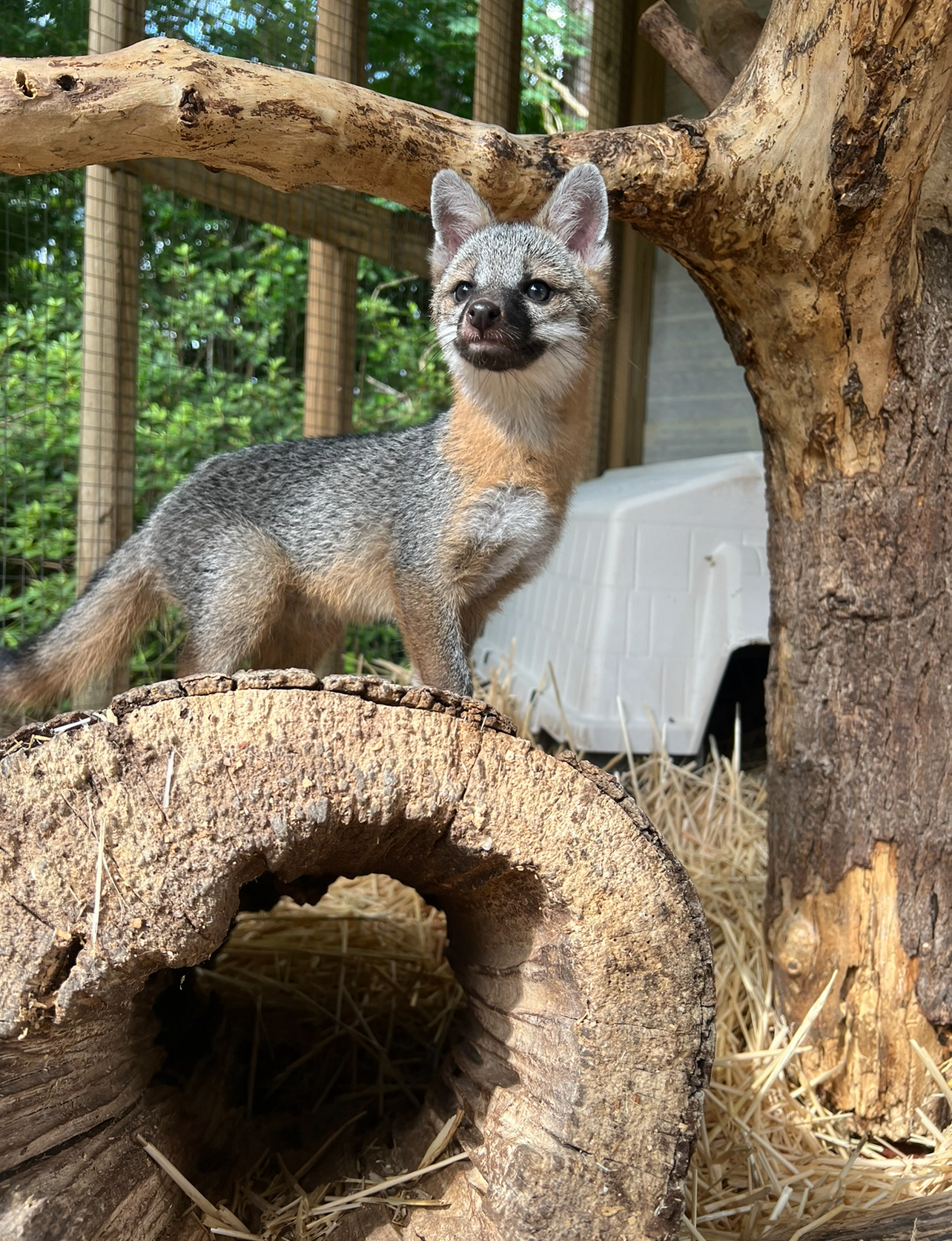
Louisiana's native fox, the gray fox is the only canid in North America that can climb trees. Shy and secretive, they are rarely seen despite being common throughout the state.
Found in mixed hardwood forests, brushy areas, and forest edges throughout Louisiana. They prefer areas with dense cover and often den in hollow logs, rocky outcrops, or underground burrows. Unlike red foxes, gray foxes strongly prefer forested habitats.
Omnivorous, eating rabbits, mice, birds, insects, fruits, nuts, and berries. They are more omnivorous than red foxes and consume more plant material. Their diet shifts seasonally depending on availability.
Primarily nocturnal and crepuscular. Gray foxes are unique among canids for their ability to climb trees — they use this skill to escape predators and forage for fruit. They live in small family groups and both parents raise kits. They communicate through barks, growls, and scent marking.
Gray foxes are the only canid in North America that can climb trees
They use their semi-retractable claws to grip bark like a cat
Despite their name, gray foxes often have rusty red patches on their sides and neck
They are one of the oldest living members of the dog family — dating back 10 million years
Gray foxes can rotate their forearms much more than other canids, aiding in climbing
Their bushy tail has a black stripe down the top, distinguishing them from red foxes