Loading

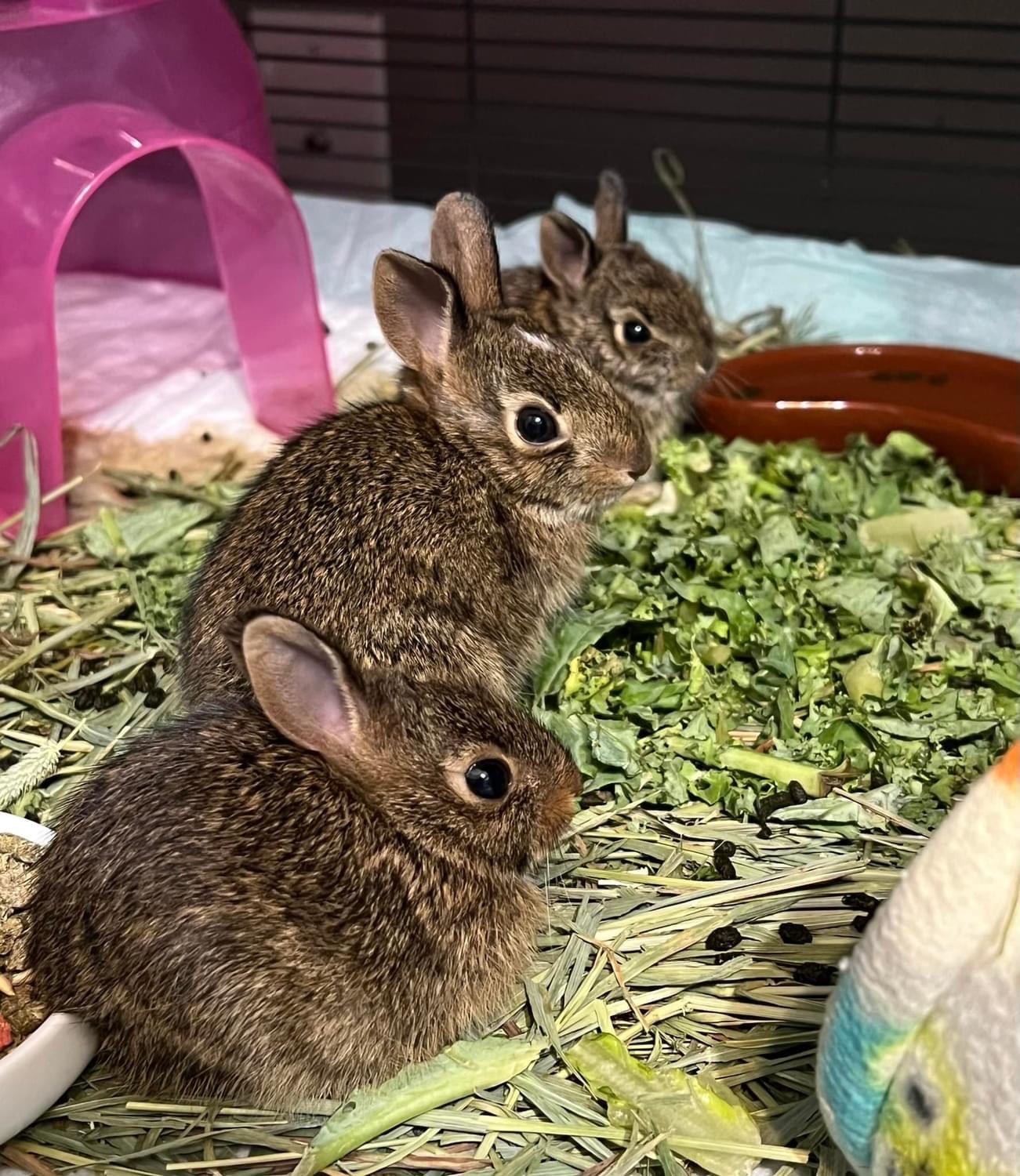
Sylvilagus floridanus
Common rabbits that are frequently orphaned when nests are disturbed by mowing, pets, or construction. Despite their adorable appearance, cottontails are challenging to rehabilitate and have a high stress sensitivity.
Found in meadows, fields, forest edges, and suburban areas throughout Louisiana. They create shallow nest depressions called "forms" in tall grass, often in lawns, gardens, and other areas humans frequent. They do not burrow like European rabbits.
Herbivorous, eating grasses, clover, wildflowers, garden vegetables, bark, and twigs. In winter, they consume more woody plants and bark. They practice cecotrophy - re-eating special droppings to extract additional nutrients.
Crepuscular (most active at dawn and dusk), cottontails are solitary and highly alert. When threatened, they freeze or flee in a zigzag pattern at speeds up to 18 mph. Mothers visit nests only twice daily (dawn and dusk) to avoid attracting predators. Baby rabbits are independent at just 3-4 weeks old.
Baby cottontails are independent at just 3-4 weeks old
Rabbits can see nearly 360 degrees around them with minimal blind spots
They can run up to 18 mph in a zigzag pattern to escape predators
A rabbit's teeth never stop growing - they wear down through constant chewing
Mother rabbits only nurse their babies about 5 minutes per day
Cottontails are not related to the domestic rabbits kept as pets