Loading

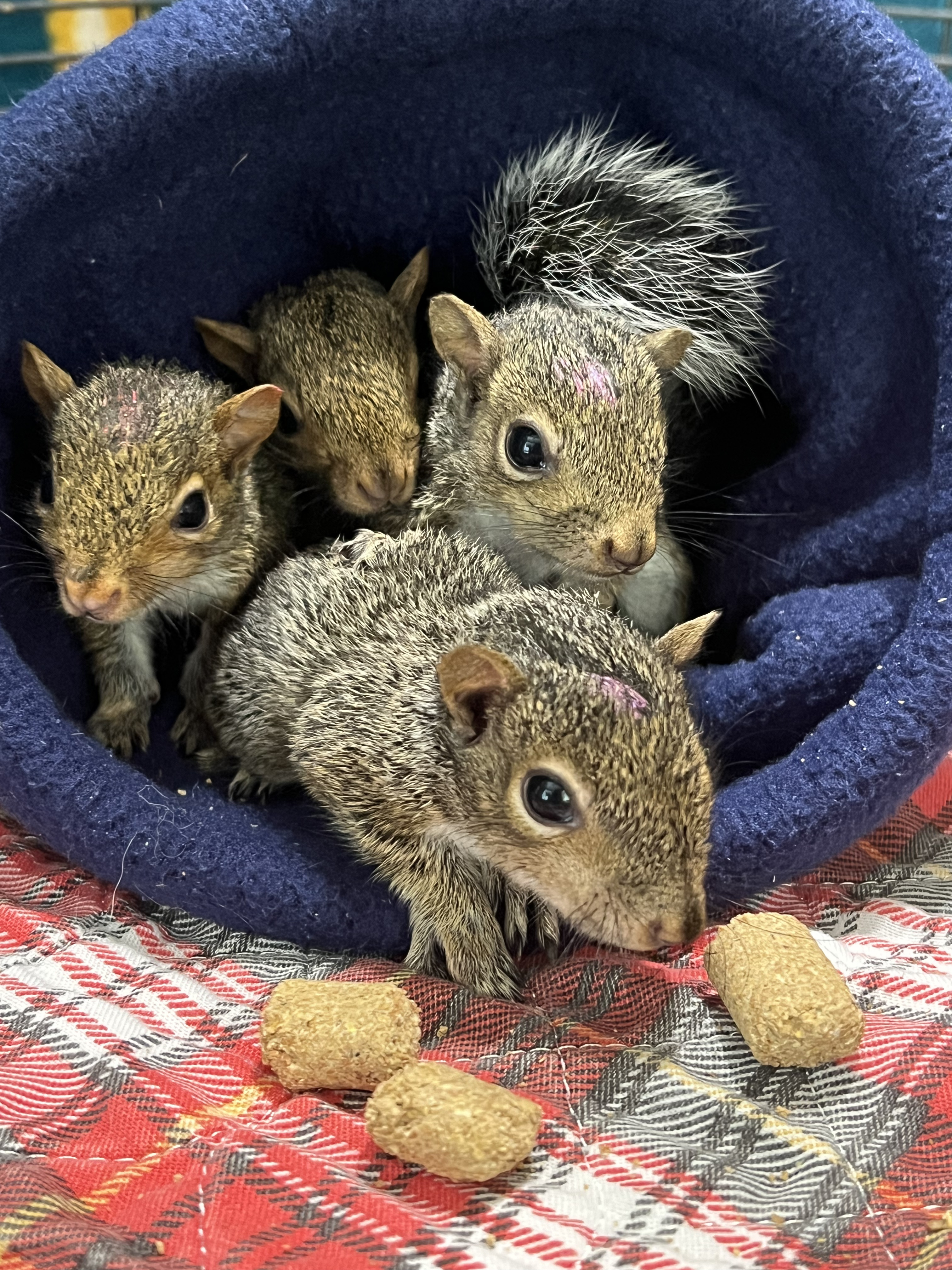
Sciurus carolinensis
One of the most common wildlife species we rehabilitate, especially orphaned babies in spring and fall. These acrobatic rodents are essential for forest regeneration through their seed-caching behavior.
Abundant in hardwood and mixed forests, parks, and suburban neighborhoods across Louisiana. They build large nests called "dreys" from leaves and twigs high in trees, and also use tree cavities. They are highly adaptable to urban environments.
Primarily herbivorous, eating nuts (especially acorns and hickory), seeds, tree buds, bark, fungi, and occasionally insects or bird eggs. They cache thousands of nuts each fall, and their "forgotten" caches help regenerate forests by planting new trees.
Diurnal (active during day), most active in early morning and late afternoon. They do not hibernate but may stay in nests during extreme weather. Squirrels are highly territorial and communicate through tail movements and vocalizations. They can jump up to 10 times their body length.
Squirrels can find buried nuts by smell, even under a foot of snow
They plant thousands of trees each year by forgetting where they buried nuts
Their ankle joints rotate 180 degrees, allowing them to climb down trees headfirst
Squirrels have four front teeth that never stop growing
They can fall from heights of 100 feet without injury due to their body/tail design
A squirrel's brain is roughly the size of a walnut